Alternative to Knee Replacement · Oakville, Ontario
PRP for Knee Osteoarthritis
Been told you'll need a knee replacement? PRP can often help you delay or avoid surgery entirely. A regenerative injection that uses your own blood's healing factors — the most thoroughly studied PRP application, with results often lasting 1 to 2 years from a treatment course.
About the Condition
Knee Osteoarthritis Treatment in Oakville, Ontario
Knee osteoarthritis is the gradual wearing down of the cartilage that cushions your knee joint. As the cartilage thins, bones rub against each other, causing pain, stiffness, swelling and reduced mobility — often worse first thing in the morning or after activity.
Conventional treatments — pain medications, cortisone shots, hyaluronic acid (“gel”) injections, physiotherapy and bracing — work for some patients but only manage symptoms. They don't address the underlying cartilage damage. For mild-to-moderate knee osteoarthritis, PRP offers a regenerative alternative that can both relieve pain and stimulate the joint to heal.
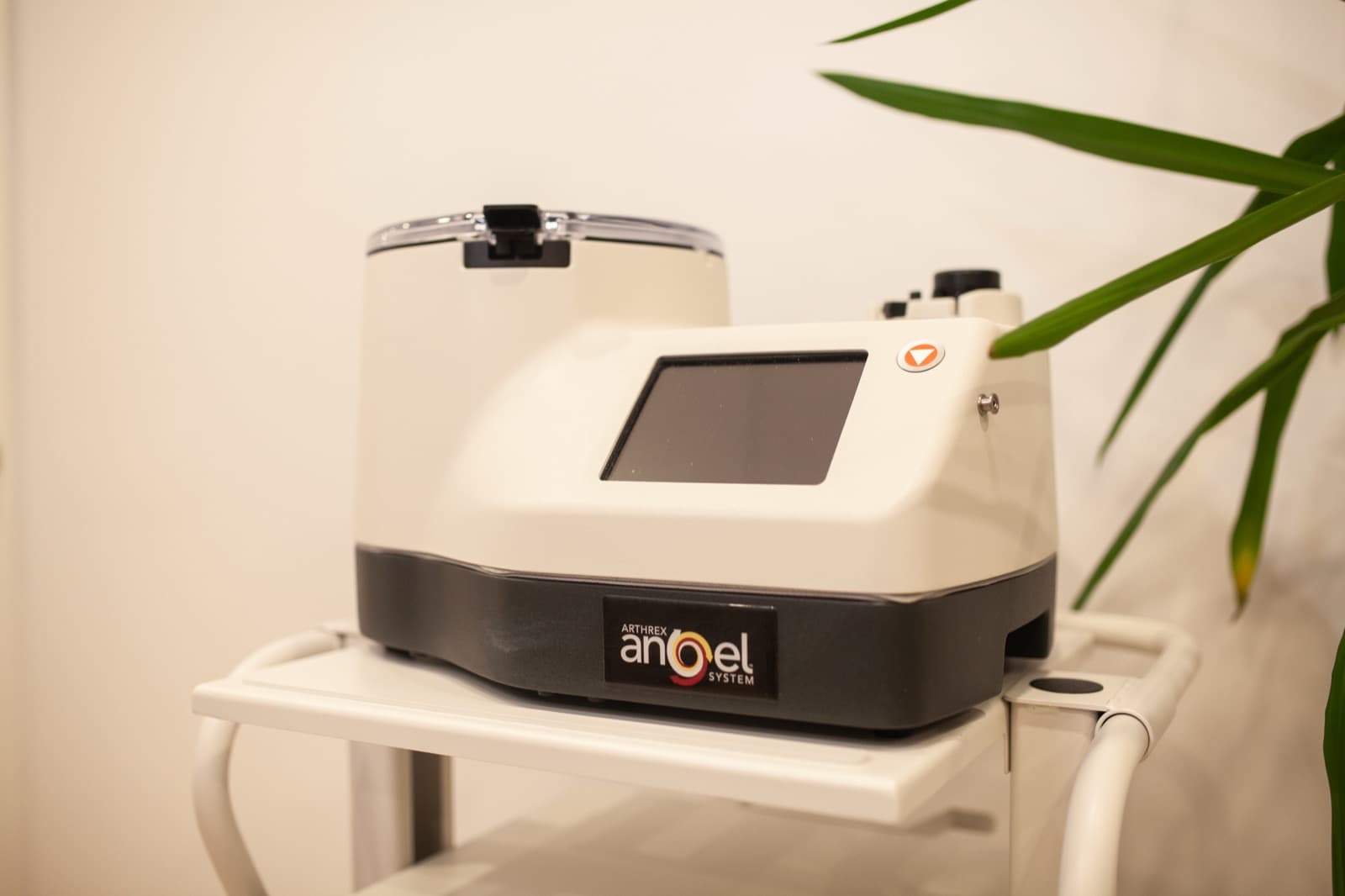
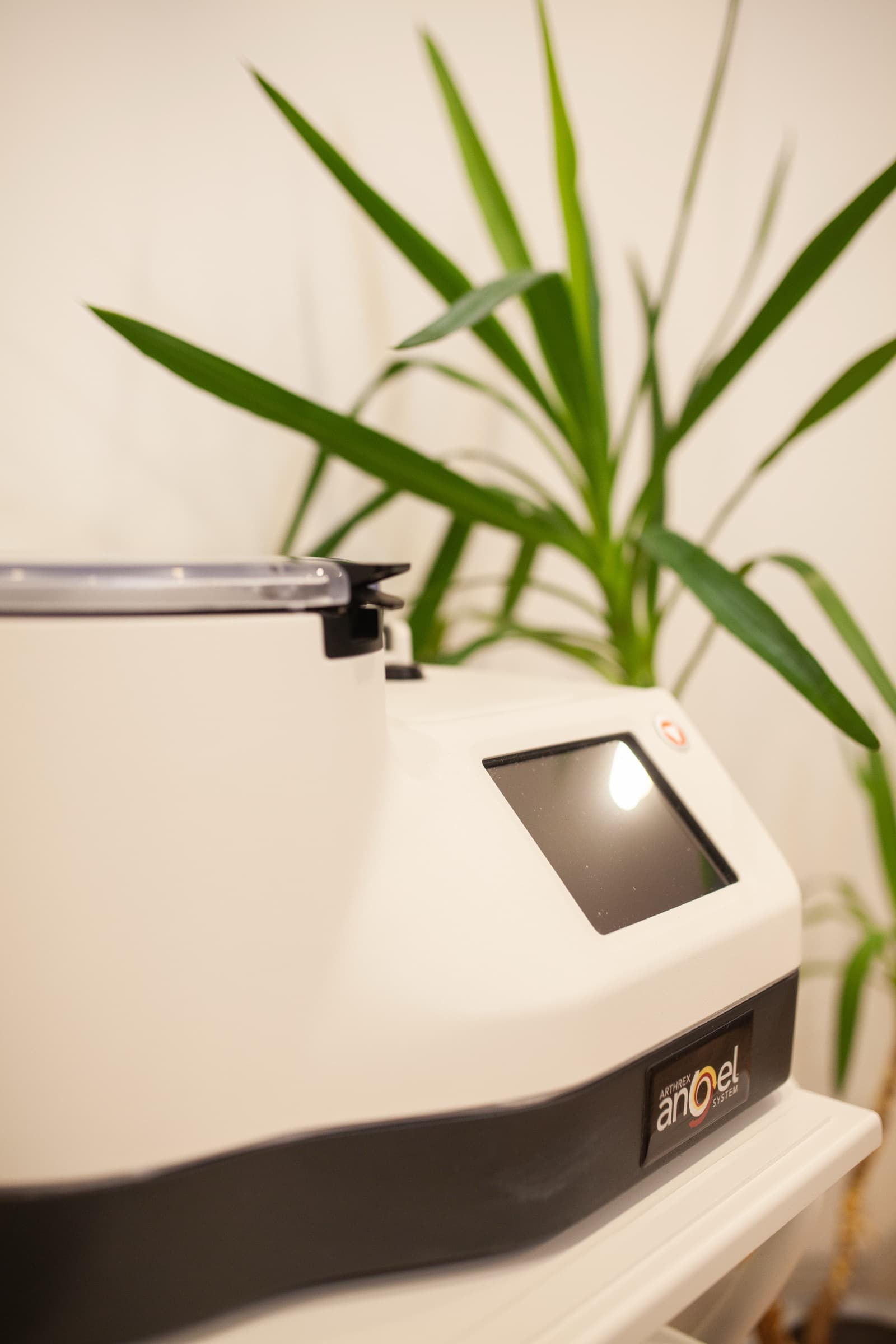
At Oakville Pain Clinic, we treat knee osteoarthritis patients from across Oakville, Burlington, Mississauga, Milton and the Halton Region with ultrasound-guided PRP using the Arthrex Angel system — a hospital-grade platform that produces highly concentrated platelet preparations.
Conditions We Treat
Knee Osteoarthritis — Forms We Address
We tailor each PRP treatment to your specific diagnosis. Below are the most common presentations we see at Oakville Pain Clinic.
Avoiding Knee Replacement
Patients who've been told they'll need surgery and want to delay or avoid it.
Mild-to-Moderate Knee OA
The strongest evidence for PRP. Typically responds well in patients with KL grade 2–3.
Failed Cortisone or HA
When gel shots or cortisone have stopped working, or stopped lasting.
"Bone on Bone" Knees
Even severe radiographic OA can respond — we'll give you an honest assessment of likelihood.
Post-Arthroscopy Pain
Persistent knee pain after meniscus surgery or scope procedures.
Patellofemoral Pain
Pain at the front of the knee, often from cartilage wear under the kneecap.
Post-Traumatic Knee OA
Arthritis that develops after an old ACL, meniscus or sports injury.
Active Older Adults
Patients who want to stay active and avoid the disability of advanced OA.
Why PRP Works
PRP as an Alternative to Knee Replacement Surgery
Many of our knee osteoarthritis patients arrive having been told they'll eventually need a total knee replacement. PRP doesn't replace surgery for everyone — but for many patients with mild-to-moderate knee OA, it can meaningfully delay or eliminate the need for surgery for years.
Knee osteoarthritis has the strongest evidence base of any PRP application. A 2024 meta-analysis of randomized controlled trials found that PRP produces clinically significant pain relief and functional improvement at 3-, 6- and 12-month follow-up — with sustained benefit often lasting up to 2 years from a treatment course. For more on what realistic non-surgical options actually look like, read our companion blog post: Alternatives to Knee Replacement Surgery in Oakville.
Head-to-head comparative reviews of PRP versus hyaluronic acid show that PRP often outperforms the standard “gel” injection (viscosupplementation) for mild-to-moderate knee osteoarthritis, with longer-lasting benefit. PRP also avoids the cartilage thinning that can accompany repeated cortisone use, as outlined by the American Academy of Orthopaedic Surgeons (AAOS).
The mechanism: concentrated platelets release growth factors directly into the joint that reduce inflammation, support remaining cartilage and improve the joint environment. PRP doesn't grow new cartilage from nothing, but it can meaningfully slow disease progression and let many patients return to active life without surgery.
- •A real non-surgical alternative — many patients delay or avoid knee replacement entirely
- •Strong evidence: pain relief sustained over 1–2 years from a single treatment course
- •Often outperforms hyaluronic acid (“gel”) injections in head-to-head studies
- •Avoids the cartilage thinning associated with repeated cortisone
- •Uses your own blood — no synthetic medication or foreign material
- •Ultrasound-guided injection ensures the PRP enters the joint, not surrounding soft tissue
- •Pairs well with physiotherapy, weight management and activity modification
- •Honest assessment: severe “bone-on-bone” OA may still ultimately need surgery — we tell you upfront
The Process
How Your PRP Treatment Works
The full procedure is completed in a single in-clinic visit of about 60 minutes — from blood draw to injection.
Consultation
Your physician reviews your imaging, examines your knee, and confirms that PRP is the right treatment based on the severity and pattern of your osteoarthritis.
Blood Draw & PRP Prep
A small blood sample is drawn and processed in our Arthrex Angel system to isolate concentrated platelet rich plasma.
Ultrasound-Guided Injection
The PRP is delivered into the knee joint under live ultrasound guidance to confirm it reaches the joint space — not the surrounding soft tissue.
Recovery & Follow-Up
Recovery time depends on the PRP concentration chosen. Most patients return to desk work the same day with lower-concentration PRP. We typically recommend a course of 1–3 sessions spaced 4–6 weeks apart.
More Regenerative Options
PRP, Exosomes & Other Treatments
This page focuses on PRP for knee osteoarthritis. Learn more about our full PRP therapy programme, our Health Canada-approved autologous exosome therapy (MCT System) for a more potent regenerative response, or all of our pain treatment options in Oakville.
Related Conditions
Other conditions we treat with PRP
Patients with knee osteoarthritis often have — or develop — overlapping problems. Here are the related pages worth reading next.
PRP for Achilles & Patellar Tendinopathy
Active patients with knee OA often have overlapping patellar tendon (jumper's knee) issues. Same regenerative approach.
Read more →PRP for Plantar Fasciitis
Lower-limb chain dysfunction frequently presents with both knee OA and chronic heel pain.
Read more →PRP for Shoulder & Rotator Cuff
Bilateral joint osteoarthritis is common — many of our knee OA patients also have shoulder OA or rotator cuff pain.
Read more →Related Reading
From the Oakville Pain Clinic blog
Alternatives to Knee Replacement Surgery in Oakville — What Actually Works
An honest, evidence-based walkthrough of the full non-surgical treatment hierarchy, including PRP, MCT exosome therapy and Arthrosamid.
PRP vs Cortisone: Which Is Right for Your Joint or Tendon Pain?
If you've been told to try cortisone first, here's how the two treatments actually compare for knee osteoarthritis.
How Long Until PRP Actually Works? A Realistic Recovery Timeline
A week-by-week breakdown of what to expect after your knee PRP injection.
Frequently Asked Questions
Knee Osteoarthritis & PRP — FAQ
Does PRP really work for knee osteoarthritis?
+
Yes — knee osteoarthritis has the strongest evidence base of any PRP application. Multiple meta-analyses of randomized controlled trials show clinically significant pain reduction and improved function lasting 12 to 24 months from a single treatment course. PRP often outperforms hyaluronic acid (“gel”) injections in head-to-head studies, particularly for mild-to-moderate osteoarthritis (Kellgren-Lawrence grade 2–3).
Is PRP better than cortisone for knee arthritis?
+
They work differently. Cortisone is a steroid that suppresses inflammation and provides quick pain relief — but the relief is temporary (weeks to a few months) and repeated cortisone injections can actually thin cartilage over time. PRP stimulates the joint to heal: relief builds over 2–6 weeks and lasts much longer (often a year or more), and PRP doesn't damage cartilage. Many patients turn to PRP after cortisone has stopped lasting.
How is PRP different from a hyaluronic acid (gel) injection?
+
Hyaluronic acid is a synthetic lubricant — it adds slip to the joint but doesn't change the underlying disease. PRP is your own concentrated platelets, which release growth factors that actually improve the joint environment. Studies suggest PRP gives longer-lasting benefit than hyaluronic acid for most patients with mild-to-moderate knee osteoarthritis.
How long do PRP knee injections last?
+
Most patients experience meaningful relief for 12 to 24 months from a single treatment course (typically 1 to 3 injections spaced 4 to 6 weeks apart). Some patients return for a maintenance injection annually. Results vary based on the severity of osteoarthritis, your activity level, weight, and how aggressive a healing response your physician selects with the right PRP concentration.
Is PRP a good option if I'm trying to avoid knee replacement surgery?
+
For many patients, yes. PRP can meaningfully delay the timeline to knee replacement — sometimes by years — by reducing pain, improving function and slowing disease progression. It's most effective in mild-to-moderate osteoarthritis. In severe end-stage osteoarthritis where the joint space is essentially gone, PRP is less effective and surgery may be the better choice. Your physician will give you an honest assessment based on your imaging.
What are the alternatives to knee replacement surgery besides PRP?
+
There's a hierarchy of non-surgical options. First-line care includes physiotherapy, weight management, activity modification and over-the-counter anti-inflammatories. When that's not enough, injection options include cortisone (fast but short-lived), hyaluronic acid (the “gel” injection — modest, temporary), PRP (regenerative, longer-lasting), MCT autologous exosome therapy (a more potent regenerative option), and Arthrosamid (a single-injection hydrogel that lasts 2+ years for mild-to-moderate knee OA). For a full breakdown read our blog post on alternatives to knee replacement surgery, or come in for a consultation — we'll walk through the right option for your specific knee.
I've been told I have "bone on bone" knees. Can PRP still help?
+
Sometimes — but we'll be honest with you. Severe radiographic osteoarthritis (Kellgren-Lawrence grade 4, often called “bone on bone”) is the population where PRP has the lowest expected response, because there's very little remaining cartilage for PRP to support. That said, some bone-on-bone patients do experience meaningful symptom relief, particularly when the pain pattern doesn't match the severity of the imaging. Your physician will review your X-ray, examine your knee, and give you an evidence-based assessment of whether PRP is worth trying or whether surgical consultation is the better next step.
Does PRP for knee osteoarthritis hurt? What's the recovery like?
+
The injection itself is similar to a standard knee injection — most patients describe mild to moderate discomfort, and we use local anesthetic to minimize pain. Recovery depends on the PRP concentration. With our highest-concentration PRP, expect about 2 weeks of bracing to keep weight off the knee, with significant discomfort possible for the first 48 hours — braces and crutches are available for purchase at the clinic, and you'll need a ride home. With lower-concentration PRP, recovery is much easier — most patients return to desk work the same day, with mild soreness for 2–5 days. Your physician will recommend the right concentration at consultation.
How much does PRP for knee osteoarthritis cost in Oakville?
+
PRP is a private-pay procedure not covered by OHIP. Cost varies based on the concentration selected and whether ultrasound guidance is used. Many extended-health benefit plans cover a portion under regenerative medicine, sports medicine or specialist injection benefits — we provide detailed receipts for insurance submission. Detailed pricing is reviewed at your consultation.
Can both knees be treated at the same visit?
+
Yes — patients with bilateral knee osteoarthritis can have both knees treated in a single visit. Some patients prefer to stage treatments (one knee, then the other a few weeks later) so that mobility isn't compromised on both sides simultaneously, especially if a high-concentration PRP with bracing is recommended. Your physician will plan this with you at consultation.
Do I need a referral for PRP knee treatment in Oakville?
+
No. Oakville Pain Clinic accepts self-referrals — book directly through our online self-referral form or call 647-910-5359 and our team will contact you within 24 hours to schedule your consultation. We also accept referrals from family doctors, sports-medicine physicians, physiotherapists and orthopaedic surgeons.
Ready to Start?
Book a Knee Osteoarthritis Consultation
No physician referral required. Self-refer today and our team contacts you within 24 hours to schedule your consultation.
Sources & References
The clinical evidence cited above is drawn from the following peer-reviewed studies and authoritative medical sources:
- 1.Lan Z, et al. PRP Injections for the Treatment of Knee Osteoarthritis: The Improvement Is Clinically Significant and Influenced by Platelet Concentration — Meta-analysis of Randomized Controlled Trials. PubMed, 2024.
- 2.Navigating the treatment landscape: Choosing between platelet-rich plasma (PRP) and hyaluronic acid (HA) for knee osteoarthritis management — A narrative review. ScienceDirect, 2023.
- 3.American Academy of Orthopaedic Surgeons (AAOS) — Platelet-Rich Plasma (PRP). OrthoInfo.
- 4.Johns Hopkins Medicine — Platelet-Rich Plasma (PRP) Treatment.
The information on this page is for general educational purposes only and is not a substitute for personalized medical advice. Consult one of our physicians to discuss whether PRP therapy is right for your specific condition.
PRP for Knee Osteoarthritis in Oakville — Serving the Halton Region & GTA
Oakville Pain Clinic offers ultrasound-guided platelet rich plasma (PRP) injections for knee osteoarthritis using the Arthrex Angel system. Our board-certified physicians treat patients with mild-to-moderate knee arthritis who want a regenerative alternative to repeated cortisone, who haven't responded to hyaluronic acid (“gel”) injections, or who want to delay or avoid total knee replacement.
We treat knee osteoarthritis patients from across Oakville (Bronte, Glen Abbey, West Oak Trails, Joshua Creek, Iroquois Ridge, College Park, Old Oakville, Eastlake, Clearview), as well as Burlington, Mississauga, Milton, Hamilton, Halton Hills (Georgetown and Acton), Brampton, Etobicoke and Toronto. Our clinic is located at Unit 7, 1400 Cornwall Road in Oakville, easily accessible from the QEW, 403 and 407.
If you’re searching for PRP for knee arthritis Oakville, knee pain treatment near me, an alternative to knee replacement, or regenerative knee injections in the Halton Region, contact Oakville Pain Clinic at 647-910-5359 or self-refer online — our team will reach out within 24 hours.