Frozen Shoulder Care · Oakville, Ontario
Frozen Shoulder Treatment
Frozen shoulder is a stiff, painful condition that can take 1–3 years to resolve on its own. The right treatment plan can shorten that significantly. We offer evidence-based options including cortisone, hydrodilatation, structured physiotherapy, and PRP — and we'll be honest about what the evidence actually supports.
About the Condition
Frozen Shoulder (Adhesive Capsulitis) Treatment in Oakville, Ontario
Frozen shoulder — the medical name is adhesive capsulitis — is a condition where the connective tissue capsule around your shoulder joint becomes inflamed, thickens, and tightens. The shoulder gets progressively stiffer and more painful, and the loss of range of motion can be dramatic — many patients can't reach behind their back, lift their arm above shoulder height, or sleep on the affected side.
Frozen shoulder typically progresses through three phases: a painful “freezing” phase (lasts 2–9 months), a stiff “frozen” phase (lasts 4–12 months), and a gradual “thawing” phase (lasts 6 months to 2 years). Without treatment, it usually resolves on its own — but the full cycle can take 1 to 3 years and significantly disrupt your life and work.
Frozen shoulder is more common in women than men, peaks between ages 40 and 60, and is more frequent in people with diabetes, thyroid disease, or after a period of shoulder immobilization (sling, surgery, fracture). At Oakville Pain Clinic we see patients from across Oakville, Burlington, Mississauga and the Halton Region for evidence-based frozen shoulder treatment.
Conditions We Treat
Frozen Shoulder — Forms We Address
We tailor each PRP treatment to your specific diagnosis. Below are the most common presentations we see at Oakville Pain Clinic.
Primary (Idiopathic) Frozen Shoulder
Develops without a specific trigger. The classic frozen shoulder presentation.
Diabetes-Related Frozen Shoulder
Significantly more common and often more severe in diabetic patients.
Post-Immobilization Frozen Shoulder
Develops after a sling, surgery, fracture or a period of reduced shoulder use.
Post-Surgical Frozen Shoulder
Can develop after rotator cuff repair, shoulder arthroscopy or unrelated surgery.
Freezing-Phase Shoulder
Pain dominates over stiffness. Pain control is the priority.
Frozen-Phase Shoulder
Stiffness dominates over pain. Restoring motion is the priority.
Thawing-Phase Shoulder
Range of motion returning. Structured physiotherapy is most important here.
Refractory Frozen Shoulder
Stiffness persisting beyond 12 months despite multiple treatment attempts.
Why PRP Works
Treatment Options for Frozen Shoulder — What the Evidence Says
First-line treatment for frozen shoulder is well-established and we want to be transparent about it. The strongest evidence is for intra-articular cortisone injection combined with structured physiotherapy, particularly during the painful freezing phase. The American Academy of Orthopaedic Surgeons (AAOS) and Johns Hopkins Medicine both list this as the standard of care.
For patients who don't respond adequately to cortisone, the next step is often hydrodilatation — an ultrasound-guided injection that distends the joint capsule with saline and steroid to physically stretch the tight tissue. A 2023 systematic review and meta-analysis found hydrodilatation produces significant short- and medium-term improvements in pain and range of motion, particularly when combined with physiotherapy.
PRP for frozen shoulder is an emerging area with growing but still limited evidence. Some recent studies, including a 2022 randomized controlled trial, suggest that intra-articular PRP may improve pain and shoulder function in adhesive capsulitis, though it is not yet considered first-line therapy. We discuss PRP for frozen shoulder honestly with every patient — it's a reasonable option to consider when cortisone has been tried and is no longer adequate, or for patients who prefer to avoid repeated steroid injections, but it is not a replacement for the structured-physiotherapy backbone of treatment.
- •First-line: intra-articular cortisone + structured physiotherapy (strong evidence)
- •Second-line: ultrasound-guided hydrodilatation if cortisone is not enough
- •Emerging option: PRP for patients who want to avoid repeat steroid or have failed prior cortisone
- •Always combined with: structured physiotherapy throughout — non-negotiable
- •All shoulder injections delivered under live ultrasound guidance
- •Diabetes management matters — well-controlled diabetes improves outcomes
- •Without treatment frozen shoulder takes 1–3 years to resolve on its own
The Process
How Your PRP Treatment Works
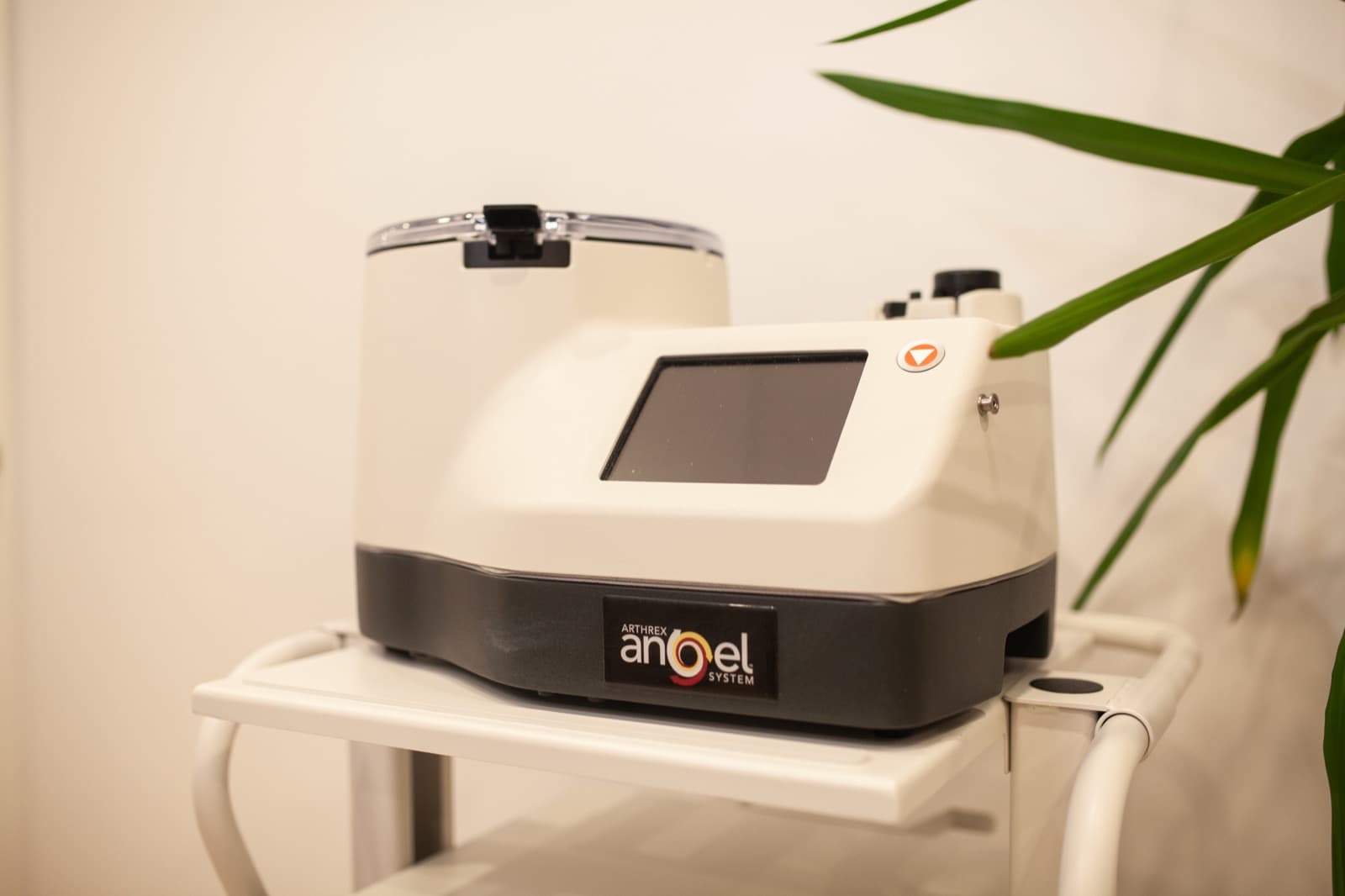
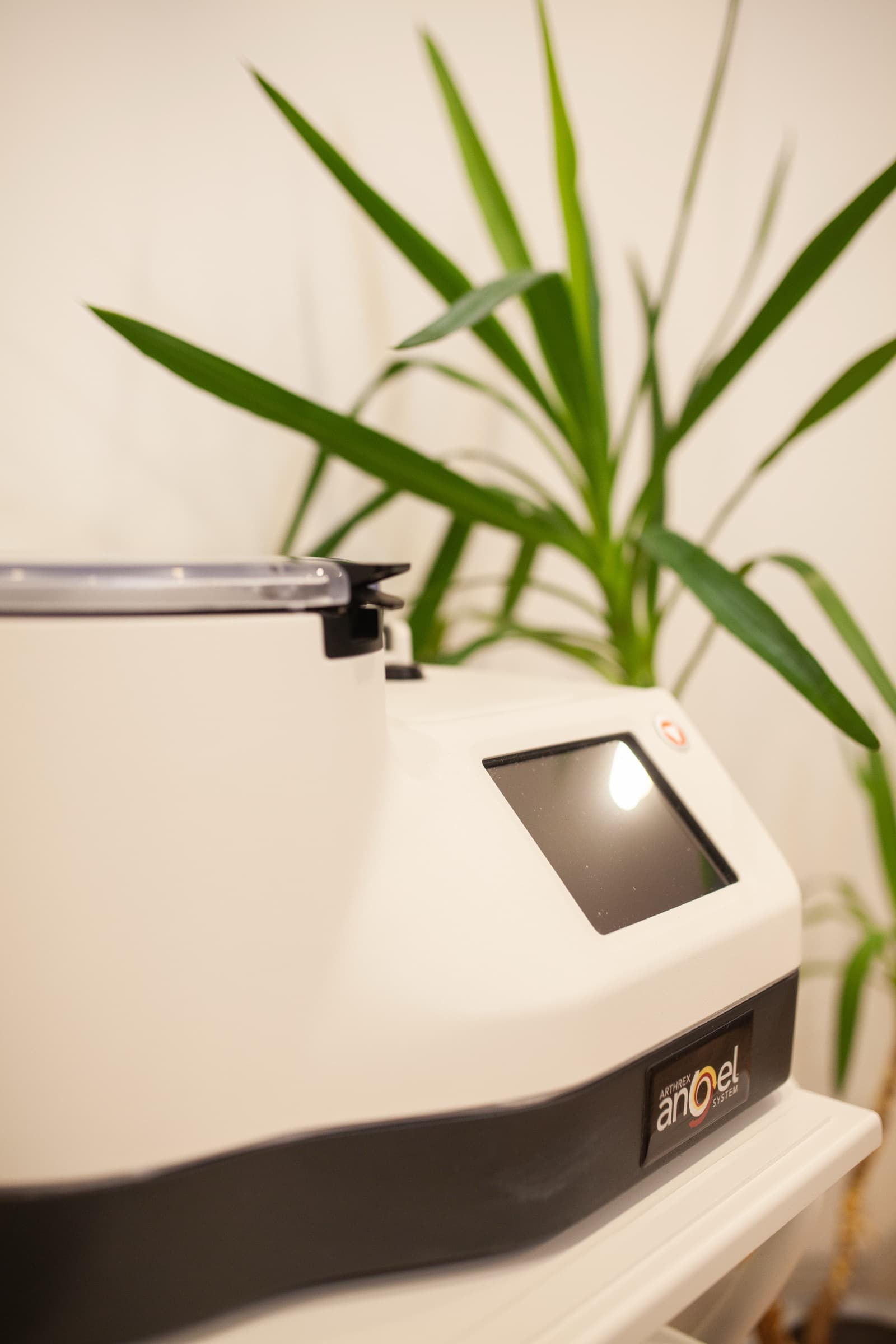
The full procedure is completed in a single in-clinic visit of about 60 minutes — from blood draw to injection.
Consultation & Assessment
Your physician examines your shoulder, measures your range of motion, reviews any imaging, and identifies which phase of frozen shoulder you're in.
Treatment Plan
We discuss the evidence honestly: cortisone, hydrodilatation, PRP, and physiotherapy. The right starting point depends on your phase, prior treatments and preferences.
Ultrasound-Guided Injection
Whatever injection we choose — cortisone, hydrodilatation or PRP — is delivered into the joint capsule under live ultrasound for accuracy.
Coordinated Physiotherapy
We coordinate with your physiotherapist for the structured stretching and strengthening that's essential for restoring shoulder motion.
More Regenerative Options
PRP, Exosomes & Other Treatments
This page focuses on PRP for frozen shoulder. Learn more about our full PRP therapy programme, our Health Canada-approved autologous exosome therapy (MCT System) for a more potent regenerative response, or all of our pain treatment options in Oakville.
Related Conditions
Other conditions we treat with PRP
Patients with frozen shoulder often have — or develop — overlapping problems. Here are the related pages worth reading next.
PRP for Shoulder & Rotator Cuff
Rotator cuff tendinopathy often coexists with — or develops after — frozen shoulder. Many patients need both addressed.
Read more →PRP for Tennis Elbow & Golfer's Elbow
Compensatory upper-extremity overuse from a stiff shoulder frequently leads to elbow tendinopathy.
Read more →PRP for Achilles & Patellar Tendinopathy
Same chronic-degenerative tissue biology, different body part. Worth understanding if you have multiple stubborn injuries.
Read more →Related Reading
From the Oakville Pain Clinic blog
Frozen Shoulder Treatment in Oakville: What Actually Works
The companion blog post to this page — deeper dive on the evidence hierarchy for frozen shoulder.
PRP vs Cortisone: Which Is Right for Your Joint or Tendon Pain?
For frozen shoulder, cortisone is often first-line — but here's when PRP makes sense as the next step.
What to Expect at Your First PRP Consultation in Oakville
If you're considering PRP for a stubborn shoulder, here's a step-by-step walkthrough of your first visit.
Frequently Asked Questions
Frozen Shoulder & PRP — FAQ
What actually causes frozen shoulder?
+
The exact cause isn't fully understood, but frozen shoulder involves inflammation and thickening of the connective tissue capsule that surrounds the shoulder joint. The capsule contracts, restricting motion and causing pain. Risk factors include diabetes (significantly higher risk), thyroid disease, a period of shoulder immobilization (after surgery, sling, fracture or stroke), and being female between 40 and 60. Sometimes it appears with no obvious trigger at all (idiopathic or 'primary' frozen shoulder).
How long does frozen shoulder last without treatment?
+
Frozen shoulder usually resolves on its own — but the full cycle of freezing, frozen and thawing phases takes 1 to 3 years. Many patients live with significant disability through that period. Treatment doesn't always shorten the total disease course dramatically, but it can meaningfully reduce pain, accelerate return of range of motion, and limit how much the condition disrupts your work, sleep and daily life.
What is the best treatment for frozen shoulder?
+
The strongest evidence supports intra-articular cortisone injection combined with structured physiotherapy as first-line treatment, particularly during the painful freezing phase. For patients who don't respond adequately, ultrasound-guided hydrodilatation (joint distension with saline and steroid) is a well-supported next step. PRP is an emerging option with growing but still limited evidence — it can be a reasonable choice for patients who want to avoid repeat cortisone or who haven't fully responded to standard care. Across all of these, structured physiotherapy is essential.
Does PRP work for frozen shoulder?
+
PRP for frozen shoulder is an emerging area. Some randomized controlled trials suggest intra-articular PRP can improve pain and shoulder range of motion in adhesive capsulitis, but the evidence base is smaller than for cortisone or hydrodilatation. We don't recommend PRP as a first-line treatment for most frozen shoulder patients, but it is a reasonable option to consider when cortisone has plateaued, when you've already had multiple cortisone injections and want to avoid more, or when your physician judges your specific clinical picture supports it.
What is hydrodilatation?
+
Hydrodilatation is an ultrasound-guided injection that distends the shoulder joint capsule with a mixture of saline, local anesthetic and a steroid. The volume of fluid physically stretches the tight, inflamed capsule, which can dramatically reduce pain and improve range of motion. It's typically used for frozen shoulder patients who haven't responded sufficiently to a first cortisone injection plus physiotherapy.
Will I need physiotherapy in addition to injections?
+
Yes — and this is the most important point. No injection (cortisone, hydrodilatation or PRP) replaces the structured physiotherapy that's essential for restoring shoulder motion. Injections control pain and reduce capsule inflammation; physiotherapy actually restores the range of motion. We coordinate closely with your physiotherapist for the best results.
How much does frozen shoulder treatment cost in Oakville?
+
Cortisone injections performed by a licensed Ontario physician are covered by OHIP with a valid health card. Hydrodilatation is sometimes OHIP-covered depending on the procedure code; sometimes private. PRP is a private-pay procedure. We confirm your specific costs at consultation and provide receipts for extended-health insurance submission for any private-pay portion.
I'm diabetic and developed frozen shoulder. Does that change things?
+
Diabetes is a major risk factor for frozen shoulder, and frozen shoulder in diabetics tends to be more severe and slower to resolve. Diabetic patients also tend to respond less robustly to cortisone, which can affect blood sugar — we monitor and discuss alternatives. Tight blood sugar control is part of the treatment plan: better glycemic control improves shoulder outcomes.
When should I consider surgery for frozen shoulder?
+
Surgery (manipulation under anesthesia or arthroscopic capsular release) is generally a last resort, considered only after 6–12 months of structured non-surgical treatment has not produced adequate improvement, particularly in the frozen phase. Most patients never need surgery — non-surgical treatment is effective for the majority. We'd refer you to an orthopaedic surgeon if surgical evaluation became appropriate.
Do I need a referral for frozen shoulder treatment in Oakville?
+
No. Oakville Pain Clinic accepts self-referrals — book directly through our online self-referral form or call 647-910-5359 and our team will contact you within 24 hours to schedule your consultation. We also accept referrals from family doctors, physiotherapists and orthopaedic surgeons.
Ready to Start?
Book a Frozen Shoulder Consultation
No physician referral required. Self-refer today and our team contacts you within 24 hours to schedule your consultation.
Sources & References
The clinical evidence cited above is drawn from the following peer-reviewed studies and authoritative medical sources:
- 1.American Academy of Orthopaedic Surgeons (AAOS) — Frozen Shoulder. OrthoInfo.
- 2.Johns Hopkins Medicine — Frozen Shoulder.
- 3.Hydrodilatation for adhesive capsulitis: A systematic review and meta-analysis. PubMed, 2023.
- 4.Effect of intra-articular platelet-rich plasma vs corticosteroid for adhesive capsulitis: a randomized controlled trial. PubMed, 2022.
- 5.American Academy of Orthopaedic Surgeons (AAOS) — Platelet-Rich Plasma (PRP). OrthoInfo.
The information on this page is for general educational purposes only and is not a substitute for personalized medical advice. Consult one of our physicians to discuss whether PRP therapy is right for your specific condition.
Frozen Shoulder Treatment in Oakville — Serving the Halton Region & GTA
Oakville Pain Clinic offers evidence-based frozen shoulder (adhesive capsulitis) treatment using ultrasound-guided cortisone injection, hydrodilatation, PRP and coordinated physiotherapy. Our board-certified physicians treat patients across Oakville and the Greater Toronto Area through all phases of frozen shoulder — freezing, frozen and thawing — with an honest, evidence-based assessment of which option is right for your specific stage and history.
We treat frozen shoulder patients from across Oakville (Bronte, Glen Abbey, West Oak Trails, Joshua Creek, Iroquois Ridge, College Park, Old Oakville, Eastlake, Clearview), as well as Burlington, Mississauga, Milton, Hamilton, Halton Hills (Georgetown and Acton), Brampton, Etobicoke and Toronto. Our clinic is at Unit 7, 1400 Cornwall Road in Oakville, easily accessible from the QEW, 403 and 407.
If you're searching for frozen shoulder treatment Oakville, adhesive capsulitis specialist near me, hydrodilatation in Ontario, or PRP for frozen shoulder in the Halton Region, contact Oakville Pain Clinic at 647-910-5359 or self-refer online — our team will reach out within 24 hours.